
Europe’s Largest Countries Ranked With Clear Population Definitions
Compare Europe’s top 10 countries by projected population for July 2026, see how including Türkiye changes the order, and prepare a sourced data table.

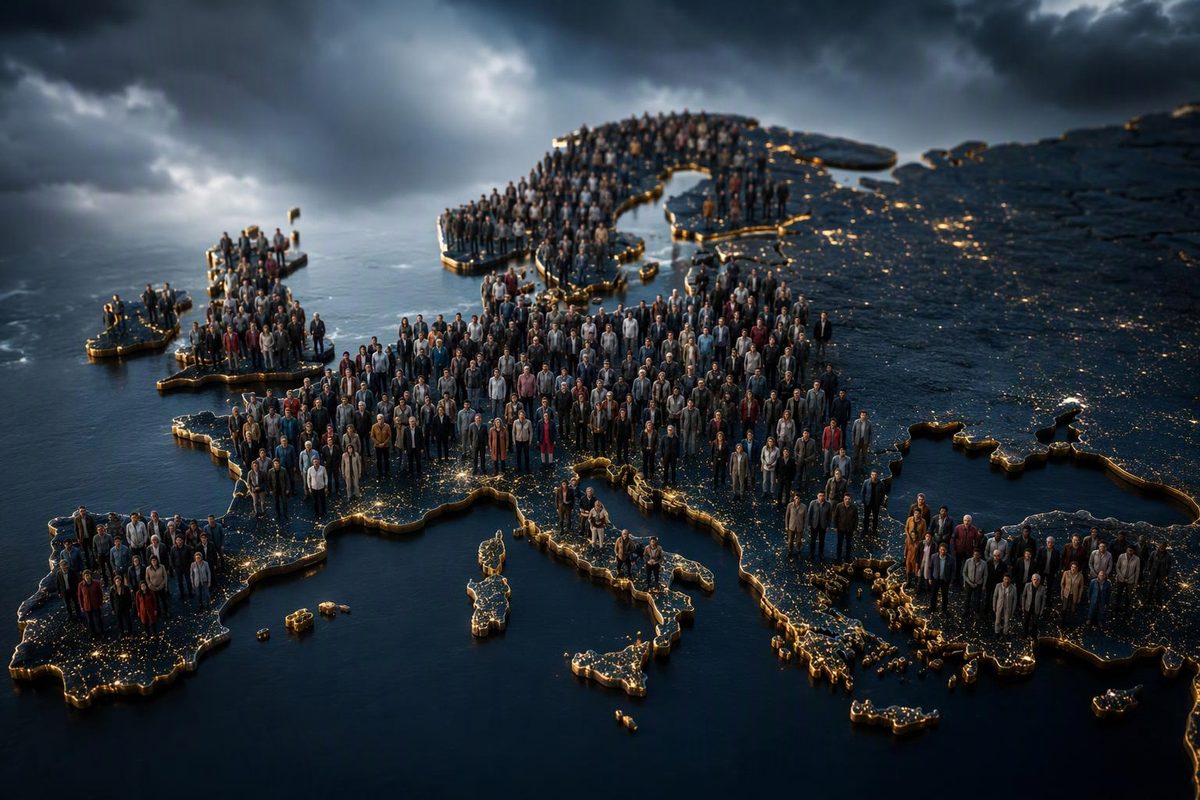
Russia ranks first among European nations by population, followed by Germany and the United Kingdom, using the UN’s M49 geographic classification and country-level population totals. Their 1 July 2026 projections are 143,394,458, 83,644,258 and 69,931,528, respectively. This ranking measures the populations of countries classified in Europe, not the number of people living within Europe’s physical boundaries.
Choose M49 Europe or add Türkiye; compare the resulting top 10 below.
Compare the Population Ranking
Russia ranks first: 143,394,458.
Germany is second under M49 Europe.
| Rank | Country | Population |
|---|---|---|
| 1 | Russia | 143,394,458 |
| 2 | Germany | 83,644,258 |
| 3 | United Kingdom | 69,931,528 |
| 4 | France | 66,746,401 |
| 5 | Italy | 58,926,166 |
| 6 | Spain | 47,850,793 |
| 7 | Ukraine | 39,535,849 |
| 8 | Poland | 37,843,188 |
| 9 | Romania | 18,800,605 |
| 10 | Netherlands | 18,448,775 |
Scope and Projection Notes
These are country-level totals, not populations within Europe's physical boundaries. Separately reported dependencies are excluded.
Türkiye: 87,926,082. Adding it places Türkiye second and moves the Netherlands outside the top 10. This is a custom scope, not UN M49 Europe.
The figures remain WPP 2024 medium projections, not observed census counts. Without JavaScript, the table shows M49 Europe; the scope comparison is described above.
Source: Worldometer's Europe table and Türkiye page, presenting UN WPP 2024; 1 July 2026, persons.
The Top 10 Use July 2026 Population Projections
The figures below come from Worldometer’s presentation of the UN’s World Population Prospects 2024, medium-fertility variant. They are 1 July 2026 projections, not census counts or live population-clock readings. Worldometer defines its annual population figures as totals for both sexes and all ages as of 1 July. See the population table source and its date and population definition.
| Rank | Country | Population | Millions* |
|---|---|---|---|
| 1 | Russia | 143,394,458 | 143.39 |
| 2 | Germany | 83,644,258 | 83.64 |
| 3 | United Kingdom | 69,931,528 | 69.93 |
| 4 | France | 66,746,401 | 66.75 |
| 5 | Italy | 58,926,166 | 58.93 |
| 6 | Spain | 47,850,793 | 47.85 |
| 7 | Ukraine | 39,535,849 | 39.54 |
| 8 | Poland | 37,843,188 | 37.84 |
| 9 | Romania | 18,800,605 | 18.80 |
| 10 | Netherlands | 18,448,775 | 18.45 |
Millions are calculated from the population column and rounded to two decimal places. Rank uses the unrounded values. The source was checked on 5 October 2026.
Country and territory coverage follows the population source. Separately reported territories have not been added to their associated countries. The France or United Kingdom row therefore should not be treated as permission to add other separately listed populations to those totals.
The table provides two representations of the same population measure. The persons column is the value to retain for sorting, calculations and export. The millions column is a compact display version, useful when presenting the ranking in a chart or a narrow summary table. It is not a separate estimate.
Although the reference date has passed, these remain projections from the 2024 revision. The UN identifies 2024–2100 as its projection period in its explanatory notes and results. Publishing the table in October 2026 does not turn the figures into observed counts. A later publication date and a population reference date describe different things and should remain separate in the dataset.
Adding Türkiye Places It Second, Not Below Germany
Under UN M49, Russia belongs to Eastern Europe. Türkiye, Cyprus, Armenia, Azerbaijan and Georgia belong to Western Asia, while Kazakhstan belongs to Central Asia. M49 describes these groupings as being for statistical convenience, not statements of political affiliation.
If the chosen scope includes Türkiye and still compares country-level populations, its 2026 projection of 87,926,082 places it between Russia and Germany. That figure comes from the Türkiye population source. Germany becomes third, and the remaining countries move down one position. In the resulting top 10, the Netherlands falls outside the displayed list.
The interactive table offers precisely that comparison: the original M49 Europe ranking, or the same country set with Türkiye added. The second option is a custom scope. It is not a ranking of every possible definition of Europe, and it does not estimate the population of Türkiye’s European territory.
This distinction matters when comparing two published rankings. A table that puts Germany second and one that puts Türkiye second can both be correctly sorted. Their inclusion rules differ. Before attributing the difference to outdated population figures, check whether both tables use the same country set, reference date and population series.
Adding Türkiye also changes the rank field without changing Germany’s population value. In a reusable spreadsheet, rank is therefore an output of the selected dataset, not a permanent property of the country. Store the population independently and recompute rank after changing the scope.
National Totals Do Not Measure Population Within Geographic Europe
There are three different questions a population table might answer. The ranking above answers the first; the other two require different inclusion rules or data.
| Scope | What It Compares | Requirement |
|---|---|---|
| M49 Europe, countries only | National totals for countries classified in Europe | Exclude separately listed dependencies |
| Custom European-country list | National totals for an explicitly chosen list | Document additions and exclusions |
| Geographic Europe | People within Europe’s physical boundaries | Use suitable subnational data |
Russia’s row illustrates the distinction. M49 places the country in Europe, and the ranking uses its country-level population. The table does not split that total between European and Asian territory. It cannot establish how many of those people live on either side of a geographic boundary.
The same limitation applies if Türkiye is added. Its full country-level projection is used to calculate its position. Counting only people living in a defined European portion would require a different population measure, rather than a different sort order.
The draft sources do not provide those subnational figures. No population-within-geographic-Europe ranking can be calculated from this table alone. Keep that limitation visible if the table’s title or surrounding text could otherwise imply a physical-boundary comparison.
A nations-only ranking also needs a country-versus-dependency rule. Worldometer’s source table is explicitly headed “Country (or dependency).” Copying every source row without reviewing its status would change the scope from countries only to countries and dependencies. Conversely, adding a separately reported dependency to an associated country would change that country’s population measure. Neither operation belongs in this ranking without a disclosed change of method.
Preserve the Projection Series When Building a Larger Dataset
For a reusable dataset beyond these 10 rows, start with the UN WPP downloads rather than combining figures from different national releases. The UN offers Excel files and bulk CSV downloads. Its demographic-indicator files include both 1 January and 1 July populations, expressed in thousands.
Select the reference date and series before extracting countries. A population figure for 1 January is not interchangeable with one for 1 July, even when both are labelled with the same year. Likewise, the ranking here identifies WPP 2024 medium projections; a file assembled from other series would need a different description.
If a selected UN field is measured in thousands, multiply its value by 1,000 to obtain persons. Do not apply that conversion to the Worldometer figures above: they are already in persons. The source field’s unit, not the appearance of its digits, determines whether conversion is necessary.
Keep the source’s numeric precision during preparation. Rounding to millions should happen only when producing a display label. If rounded labels are sorted instead of the underlying values, the spreadsheet no longer necessarily preserves the source order, particularly when displayed values are close or equal after rounding.
A direct UN extraction should be labelled as a direct UN extraction. A table copied from Worldometer should identify Worldometer as the actual row source while also naming the underlying WPP revision. These describe different stages in the data’s provenance; retaining both helps readers understand where the published values came from.
Store Population, Scope and Date in Separate Fields
Use one row per country and keep the numerical measure separate from its presentation. The following fields retain the decisions that make this ranking reproducible.
| Field | What to Store |
|---|---|
rank |
Descending position within the disclosed country set |
country |
Display name, such as Russia |
iso3 |
ISO alpha-3 country code, such as RUS |
population_persons |
Numeric population in persons, without display separators |
reference_date |
2026-07-01 |
series |
WPP 2024 medium projection |
scope |
M49 Europe; separately listed dependencies excluded |
source_url |
The actual source used for that row |
The country name is the reader-facing label, while the country code provides a separate identifier for matching rows. Keep both rather than replacing a readable country name with a code in the published table.
The population_persons field should contain a number, not a string such as “83.64 million.” Commas and a millions suffix can be added for display without changing the stored value. This separation allows the public page to sort numerically and leaves the original population available to anyone downloading the dataset.
The scope field records why a country is eligible for the ranking. If Türkiye is added, change that description to identify the custom inclusion. Leaving “M49 Europe” unchanged would make the metadata contradict the rows, even though every population value remained correctly copied.
The source_url field should point to the source actually used for the row. A general publisher homepage is less useful for checking a value than the relevant population table or country page. If all rows share the same source, a visible dataset-level source note can complement the row-level field without replacing the reference date and series.
Calculate Ranks After Cleaning and Selecting Countries
Before assigning ranks, check that each country appears once, regional totals are excluded, and every row uses the same reference date and population series. A regional aggregate is not another nation and must not be allowed to compete with country rows in a descending sort.
Apply the disclosed country-selection rule to the full working dataset, then sort population_persons from largest to smallest and assign ranks. Only after those steps should a top-10 view be created. Selecting 10 rows before resolving the scope can omit an eligible country and preserve the wrong cutoff.
For this article’s default scope, the Netherlands is the last displayed country. When Türkiye is added, it enters above Germany and moves the Netherlands outside the top 10. A view limited to the original rows would miss that change unless the additional country were included before sorting.
Treat display formatting as the final stage. Check the persons values against the source, confirm that the millions labels match those values, and ensure that changing the sort does not detach country names from their populations. The spreadsheet needs complete rows, not independently sorted columns.
For a broader ranking, repeat the same preparation for the full eligible country set before taking its first 10 rows. The public ranking disclosure checklist covers the additional decisions readers need to interpret ranks, ties and missing values.
Publish the Definition Alongside the Interactive Table
Export the cleaned file as CSV or retain it as XLSX. TablePage supports CSV, TSV, XLSX and XLS uploads and generates a public dataset page with a shareable link and filterable table through its publishing workflow.
A suitable dataset title is “European countries by population — 1 July 2026, WPP 2024 medium projection.” Place the geographic rule and country/territory coverage beside the table, not only in a separate methodology document. Readers should be able to see immediately whether Türkiye is included and whether the figures are national totals.
Review the published page to confirm that population is interpreted numerically. Check that the descending order matches the source values and that the reference date is visible without opening another document. Keep the projection label attached to the dataset wherever the table is shared.
If a published view allows readers to switch scopes, its result should also identify the active rule. A changed rank without a changed scope label makes a valid comparison look inconsistent. The useful output is not just an ordered list: it is an ordered list whose country selection, units, reference date and source remain visible.